Vitrified Tactile Tiles
Product summary
Vitrified tactile tiles (also known as blister or corduroy tiles) are specialized floor safety products designed to assist the visually impaired. Because they are vitrified, they offer the extreme density and low porosity of porcelain, making them far superior to concrete or rubber versions for high-traffic urban environments.
Category
Tactile Tiles
Built for B2B buyers looking for dependable supply and clear specifications.
Long information
Detailed product information
Technical Specifications
These tiles must meet strict international and local standards (such as ISO 23599 or ADA guidelines) to ensure the patterns are detectable underfoot or by cane.
Water Absorption: < 0.5% (Standard for fully vitrified porcelain).
Hardness: 6 to 7 on the Mohs Scale, ensuring the raised studs do not wear down over time.
Slip Resistance: Typically R11 to R13 (DIN 51130), essential for outdoor use in wet conditions.
Breaking Strength: > 2000 N (designed to withstand heavy pedestrian flow and light vehicle crossings).
Thickness: Generally 10mm to 12mm for the base, with an additional 4mm to 5mm for the raised profiles.
Types of Tactile Profiles
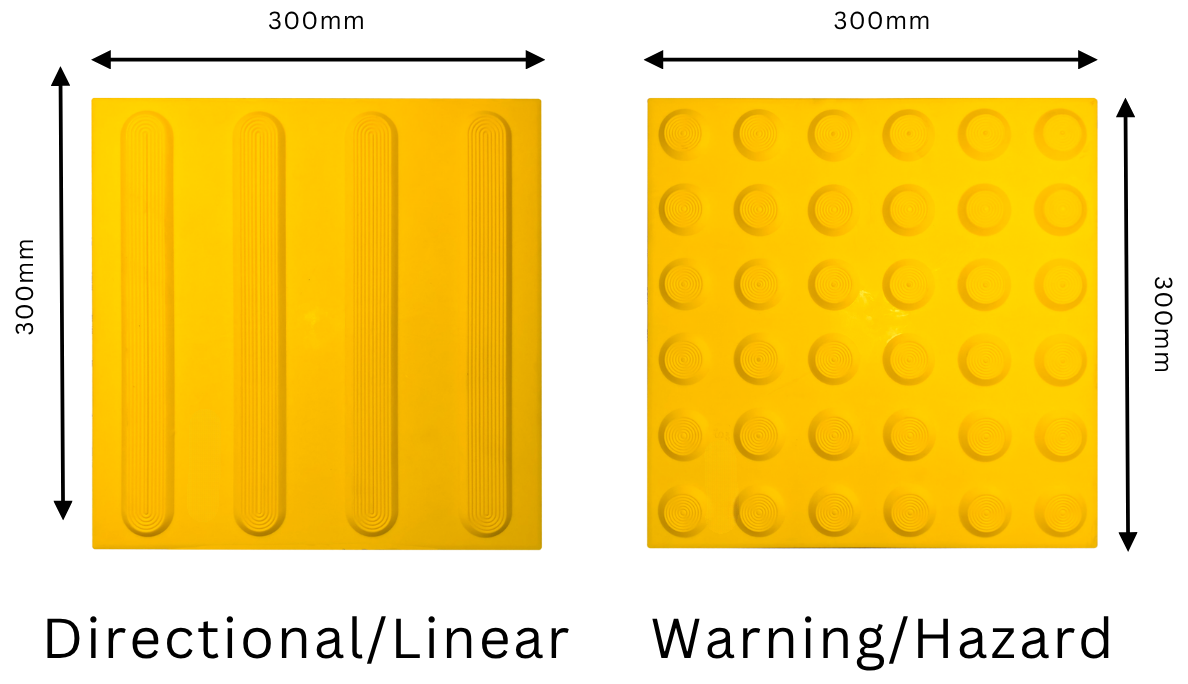
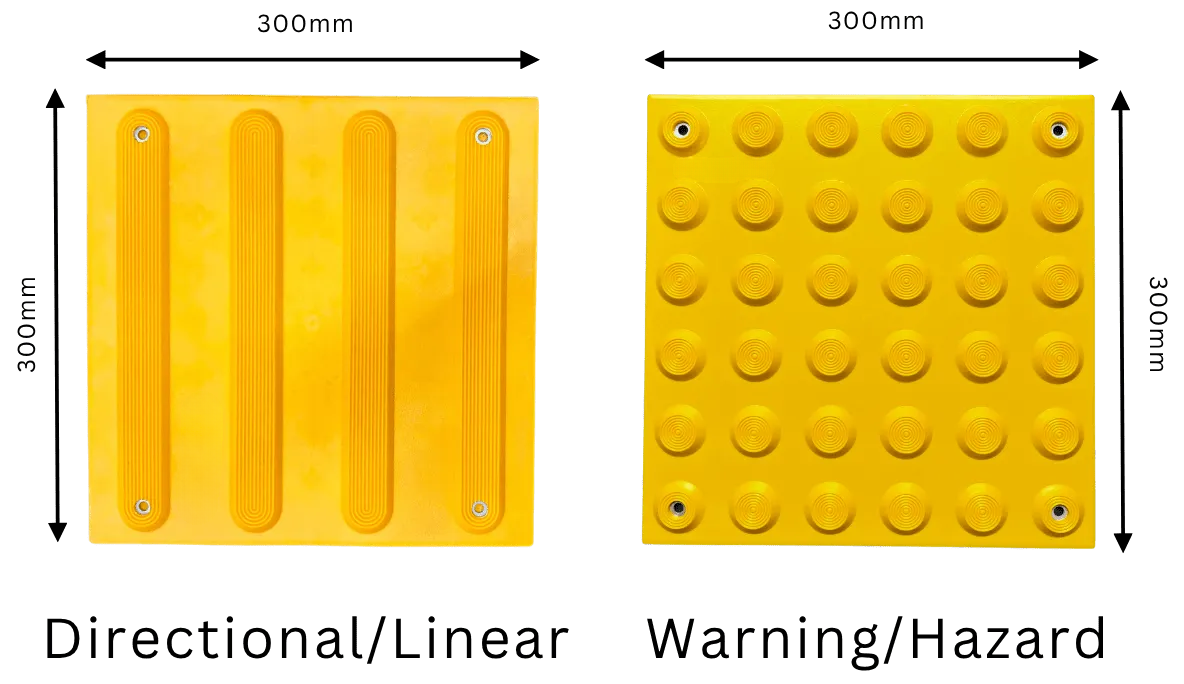
1. Warning (Blister / Stud) Pattern
Description: Raised circular domes arranged in a square or staggered grid.
Purpose: Indicates a hazard or a change in level.
Placement: Found at the edges of railway platforms, pedestrian crossings, and at the top/bottom of staircases.
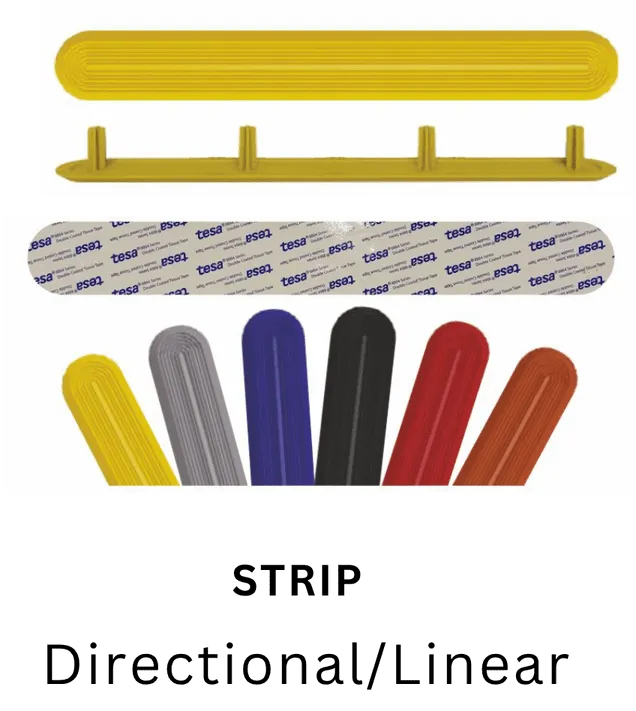
2. Directional (Corduroy / Linear) Pattern
Description: Raised parallel "bars" or ribs.
Purpose: Indicates a safe path of travel.
Placement: Used to guide users across large open plazas or through complex transit hubs.
Key Features of Vitrified Tactile Tiles
1. High Visual Contrast (LRV)
By law, these tiles must have a specific Light Reflectance Value (LRV) contrast against the surrounding floor (usually a 30% difference). Vitrified tiles are ideal here because the color is baked in at high temperatures, ensuring it won't fade or peel under UV exposure.
2. Thermal & Chemical Stability
Unlike rubber or plastic tactiles, vitrified versions will not warp or "pop up" in extreme heat. They are also resistant to salts and oils, which is critical for sidewalk installations in cities.
3. Maintenance
The vitrification process creates a non-porous surface. This prevents gum, dirt, and grime from bonding to the tile, allowing the "studs" to remain clearly detectable and the colors to remain bright for safety.
Installation Requirements
To ensure the specifications are met, the following installation materials are typically used:
Adhesive: A high-strength, SBR-fortified (flexible) cementitious adhesive or an epoxy-based adhesive for maximum bond.
Grout: High-strength Epoxy Grout is recommended for the joints to prevent water ingress under the tile, which can cause the raised patterns to crack under pressure.
Leveling: The substrate must be perfectly level; any "lippage" between tiles can create a trip hazard that contradicts the tile's safety purpose.
Send inquiry
Tell us your quantity, market, and packaging requirements.